The views expressed here reflect personal observations from decades in the field and are for informational purposes only. They do not constitute financial, investment, or professional advice. Every property and situation is unique, consult a qualified professional for guidance specific to your circumstances.
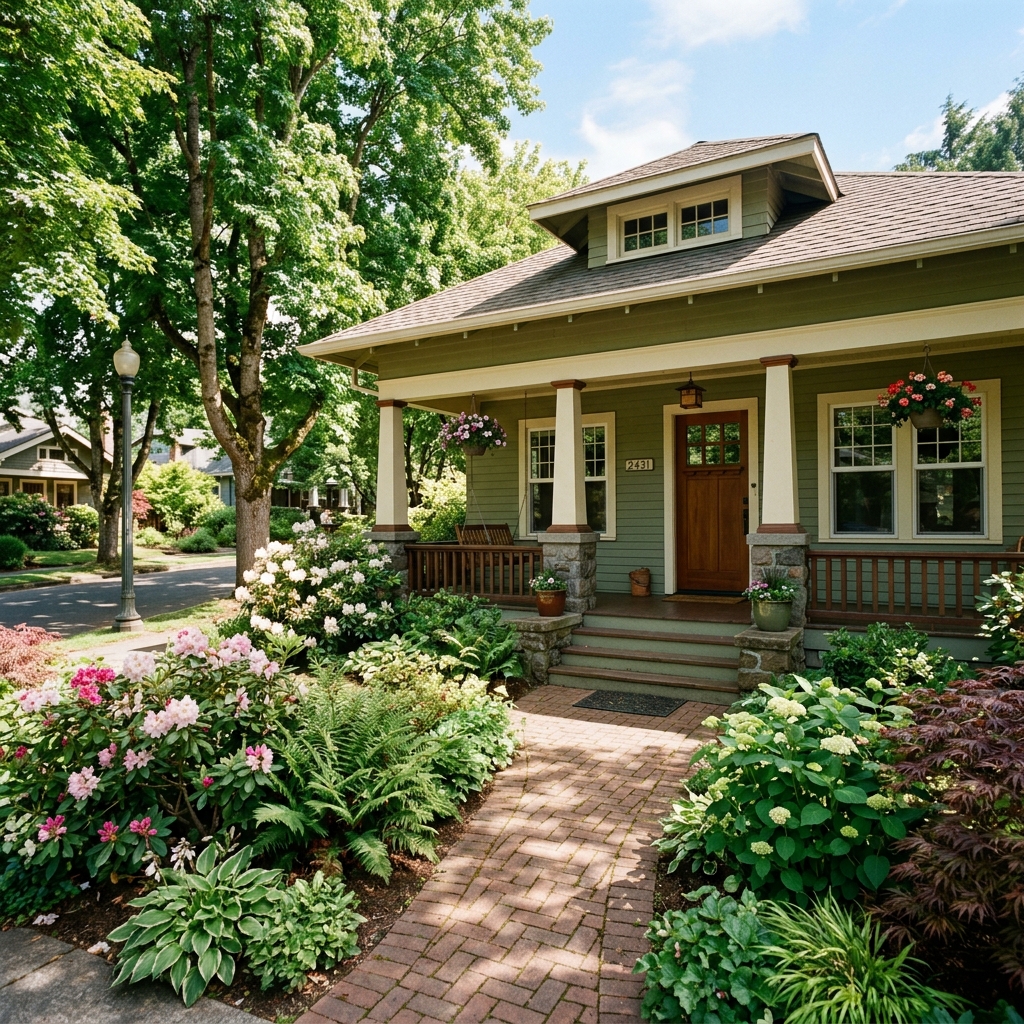
There's a house in Northeast Portland that the neighbors call The Charcoal Grey House. It's not a mansion. It's not architecturally significant in any textbook sense. It's a 1,900-square-foot tri-level on a 5,000-square-foot lot in a neighborhood where most homes sell for between $450,000 and $520,000.
It sold for $615,000. And it appraised.
I know because I was the appraiser. And I remember staring at the comps afterward thinking: how do I explain a $95,000 premium on a house that, by the numbers, is the same as everything around it?
What the owners did
The owners bought the house in 2014 for $380,000. Over the next eight years, they didn't do a single large-scale renovation. No kitchen gut. No addition. No finished basement conversion. What they did was make hundreds of small, intentional decisions.
They painted the exterior a deep charcoal grey, the kind of choice that's bold enough to be noticed but refined enough to age well. They replaced the standard front door with a solid wood door that had a presence to it. They added landscape lighting that made the house look different at night than during the day.
Inside, they replaced all the hardware, every knob, every hinge, every outlet cover, with matte black fixtures that gave the space a cohesive, almost editorial feel. They built custom floating shelves. They painted every room in a palette of warm whites and muted greens that made the whole house feel connected.
"They didn't add square footage. They added intention. And in a market full of houses that look the same, intention is the rarest material there is."
Why the name matters
At some point during their ownership, the house became "The Charcoal Grey House." Not on any listing. Not on any sign. Just in conversation. The neighbors used the name. Friends used it. The mail carrier probably used it.
Naming a house does something to it. It elevates it from a unit in a row to a specific thing, a place with an identity. This is something I explore at length in my upcoming book Famous Homes, but the short version is this: when a house has a name, people treat it differently. They maintain it differently. They value it differently.
The Charcoal Grey House wasn't just maintained. It was curated. And that curation, that sense that every detail was chosen rather than defaulted to, is what created the premium.
The lesson
You don't need $150,000 in renovations to move the needle on your home's value. You need a point of view. A direction. A set of decisions that, taken together, tell a story about care and intentionality.
The Charcoal Grey House proved that the distance between a $520,000 home and a $615,000 home isn't always measured in square footage or granite countertops. Sometimes it's measured in the quality of attention. In the consistency of vision. In whether someone decided this house was worth investing in as something more than a commodity.
The house earned its name. And the name earned its premium.